Posts

Claude AI: Intelligent Reasoning with Responsible Design

Image
  Claude AI is a sophisticated conversational artificial intelligence system developed by Anthropic, an organization committed to the advancement of safe, reliable, and ethically aligned AI technologies. The system is designed to deliver dependable and user-centered assistance across a wide range of tasks. Claude demonstrates advanced natural language comprehension, strong analytical reasoning, and the ability to generate coherent, refined written content for applications such as summarization, critical analysis, creative writing, and translation. Additionally, it possesses robust programming and debugging capabilities and supports multi-file operations, making it valuable to both software developers and general users. Recent enhancements have significantly expanded Claude’s functionality. The Opus 4.5 model represents a major progression, offering improved reasoning accuracy, enhanced coding performance, and superior long-context processing capabilities. These advancements enable ...

DeepSeek AI: Advancing Intelligent Search and Data Analysis

Image
DeepSeek AI is an artificial intelligence platform designed to improve the effectiveness of information retrieval and data analysis through advanced contextual understanding. Unlike traditional search systems, which depend largely on keyword matching, DeepSeek AI interprets user intent and semantic relationships, allowing it to deliver more accurate and meaningful results. This approach enhances efficiency and reduces the time required to locate relevant information.  The platform was developed to support intelligent search and analytical applications across academic, professional, and research environments. In January 2025, the release of the R1 model drew attention within the technology sector due to reports indicating performance comparable to leading Western artificial intelligence models, while maintaining lower operational costs. This development demonstrated the potential for cost-effective innovation in large-scale AI systems. Despite its advantages, DeepSeek AI presents ce...

Perplexity AI: A Smarter Way to Search and Verify Information

Image
  Perplexity AI is a conversational, AI-powered search engine founded in 2022 by Aravind Srinivas, Denis Yarats, Johnny Ho, and Andy Konwinski. The company was established with the objective of developing a transparent and trustworthy alternative to traditional search engines. Unlike conventional platforms that present users with lists of links, Perplexity delivers direct, concise answers supported by inline source citations. This approach allows users to verify information easily while maintaining conversational interaction. Since its launch shortly after the emergence of large language models, Perplexity AI has experienced rapid growth. By prioritizing accuracy, speed, and source attribution, it has attracted a broad user base seeking efficient access to reliable information. By July 2025, the company achieved a valuation exceeding 18 billion dollars and expanded its reach through a partnership that enabled access for approximately 360 million users in India via the Airtel Thanks...

Poe AI: Exploring Multiple AI Systems in One Space

Image
  The Platform of Open Explorations, known as Poe AI, is an all-in-one digital environment that enables users to access a wide range of advanced artificial intelligence chatbots. These include well-known models such as GPT-4, Claude, Llama, and several others, allowing users to switch between systems according to their specific requirements. By late 2023, Poe AI had recorded more than 18.4 million installations and approximately 1.22 million monthly active users, demonstrating its growing adoption. The platform supports diverse applications, including learning, writing, translation, coding assistance, summarization, entertainment, and interactive activities, making it a versatile productivity tool. One of the primary advantages of Poe AI is its ability to offer multiple AI models within a single interface. It features a simple chat-based design accessible on both mobile devices and web platforms. Users can also create customized AI bots through prompt-based configuration. The platf...

Microsoft Copilot: Redefining Productivity with AI Assistance

Image
  Microsoft Copilot is an artificial intelligence–powered assistant developed by Microsoft to support users in completing tasks more efficiently and effectively. Integrated across Microsoft applications such as Word, Excel, PowerPoint, Outlook, and Teams, Copilot assists with activities including document creation, data analysis, email writing, meeting planning, and presentation design. By automating routine tasks, it helps users save time and improve productivity. A recently introduced feature is MICRO, an animated AI assistant designed to enhance user interaction. MICRO appears as a visual avatar capable of displaying expressions, responding to voice input, and engaging in natural, human-like conversations. This feature aims to create a more engaging experience, particularly for beginners, students, and mobile users who prefer visual and interactive assistance. Additionally, Microsoft has introduced a group chat feature that allows up to 32 participants to collaborate with Copilo...

Grok AI: Real-Time Intelligence with a Human Touch

Image
  Grok AI is an artificial intelligence system developed by xAI, a company founded by Elon Musk, and was launched in November 2023. It is designed to access real-time information, including current news, trending topics, and live data, which distinguishes it from many traditional AI models. This real-time capability allows Grok to deliver timely and context-aware responses. Another defining characteristic of Grok AI is its conversational style, which incorporates humor and informal expression, creating more engaging and human-like interactions. Grok demonstrates strong reasoning and problem-solving abilities, making it suitable for content creators, professionals, and social media users who value both productivity and interactive communication. A notable feature, Grok Vision, enables users to identify and obtain information about objects using a smartphone camera. Additionally, Grok supports image generation through its Aurora model and can create videos from images, expanding its ...

Google Gemini: The Evolution of Intelligent Digital Assistance

Image
Google Gemini is a next-generation artificial intelligence system designed to operate as an advanced digital assistant across professional, academic, and creative domains. Recent versions, including Gemini 2.5 Pro, Ultra, and Gemini 3, demonstrate significant improvements in intelligence, speed, and multimodal understanding. These models can interpret voice, images, videos, documents, and on-screen content, enabling more natural and efficient user interaction. Gemini is particularly strong in reasoning, software development, complex problem-solving, long-document analysis, summarization, research, and project planning. It can rapidly generate images, videos, graphics, presentations, quizzes, notes, infographics, and small applications, supporting both productivity and creativity. Seamless integration with Google services such as Maps, Calendar, Docs, and Gmail further enhances workflow organization and ease of use. Features such as Project assist users in structuring and managing tasks...

An Overview of Github

Image
An Overview of Github The full version of "GIT" is "Global Information Tracker," emphasizing its capacity to keep track of code alterations and preserve an extensive history of them.The term "data analysis on GitHub" usually refers to the practice of examining data using code and tools that are housed on the version control and collaboration site GitHub. With the aid of data processing tools or computer languages like Python or R, it entails gathering, transforming, visualizing, and interpreting data.GitHub is a leading platform for version control and collaboration, widely used by developers, teams, and organizations to manage and share code repositories. Built on Git, an open-source version control system, GitHub enables users to track changes to code, collaborate seamlessly, and ensure the integrity of projects across distributed teams.GitHub fosters teamwork with features like pull requests for code review, inline comments for discussion, and real-time...

Data Handling using R Language

Image
  Data Handling using R Language Data handling in R is one of its core strengths, enabling users to efficiently manage, manipulate, and analyze data of various types and structures. R supports diverse data formats, including CSV, Excel, JSON, XML, and database connections, making it versatile for importing and exporting datasets. It provides robust tools for data cleaning and preprocessing, such as handling missing values, transforming variables, and reshaping datasets. Functions like read.csv(), readxl::read_excel(), and libraries such as tidyverse streamline these processes.R's data structures, including vectors, matrices, data frames, and lists, offer flexibility in organizing data for analysis. Data frames, in particular, are widely used for tabular data, allowing easy manipulation through indexing, filtering, and applying functions across rows or columns. Advanced libraries like dplyr enable users to perform operations like selecting, filtering, grouping, and summarizing data ...

Significance of Apache Hadoop

Image
  Significance of Apache Hadoop  Every day, businesses, governments, and indeed individualities induce huge quantities of data suppose social media posts, online shopping habits, rainfall reports, GPS data, and much further. Hadoop helps store and manage this" big data" by breaking it down into lower gobbets and storing them across numerous computers( or bumps) in a cluster.Apache Hadoop is a highly significant framework in the field of big data due to its ability to store, process, and analyze massive volumes of data efficiently. It is an open-source platform designed to handle structured, semi-structured, and unstructured data across distributed computing environments.Hadoop’s MapReduce framework enables parallel processing of large datasets by dividing tasks into smaller sub-tasks, which are executed across multiple nodes simultaneously. This leads to faster data processing compared to traditional methods.Hadoop can process diverse data formats, including text, images, vid...

Data Analysis using Tableau

Image
Data Analysis using Tableau  Tableau is one of the most widely recognized data analytics tools in the business intelligence (BI) world. It is renowned for its powerful data visualization capabilities and its ability to turn raw data into actionable insights. From a data analytics perspective, Tableau provides a comprehensive suite of features that allow businesses, analysts, and decision-makers to transform complex data into visually appealing, easy-to-understand reports and dashboards.Tableau was founded in 2003 with the mission to help people see and understand their data. The tool quickly gained traction because it simplified the process of data visualization and made it accessible to users without a technical background. Key features include real-time data updates, the ability to blend data from multiple sources, and advanced analytics such as forecasting and clustering. Tableau's visualization capabilities, such as heat maps, scatter plots, and treemaps, help users present com...

Data Analysis using Google Sheets

Image
  Data Analysis using Google Sheets In 2006, Google Sheets was first released as Google Spreadsheets. Later, Google acquired Writely, which changed its name to Google Docs. The development of Google Sheets as a component of the broader Google Docs suite was aided by this.Google Sheets is a web-based spreadsheet tool that is widely used for data analysis and collaboration. It offers features like formulas, pivot tables, and built-in functions for tasks such as data cleaning, sorting, filtering, and visualization. Its integration with Google Workspace allows seamless collaboration, where multiple users can work on the same sheet in real-time. With add-ons and integrations like Google Apps Script, Sheets can handle advanced tasks like automation, data imports, and connections to APIs. Additionally, its ability to create charts and graphs, coupled with accessibility from any device with an internet connection, makes it a versatile tool for data analysis, especially for small to medium-...

Data Analysis with Microsoft Excel: Overview of Tools and Features

Image
  Data Analysis with Microsoft Excel: Overview of Tools and Features Microsoft Excel is one of the most widely used data analysis tools in business and practice. From simple mathematics to complex numerical analysis, Excel provides easy access to a wide range of data manipulation tools. This article examines the key data analysis tools and features in Excel that enable users to analyze, visualize, and draw inferences from data. Excel is a spreadsheet software that lets builtintegrated customers to shop, prepare, and built-in facts. even as it's far frequently visible as a simple device for integrated facts, its range of capabilities and abilities has made it an important device for facts analysis, mabuiltintegrated for built-inpeople and small corporationsintegrated. Excel's person-pleasant built-interface, flexibility, and built-integration with other Microsoft workplace products built-in addition decorate its usability. Pivot Tables are one of the maximum effective buil...

Data Analysis Using R-Language

Image
Data Analysis Using R-Language Data analysis using R is a powerful and versatile process, offering comprehensive tools and libraries tailored for statistical computing, data manipulation, and visualization. R supports importing data from various formats, such as CSV, Excel, JSON, databases, and APIs, making it suitable for diverse analytical needs. It excels in cleaning and preparing datasets through packages like dplyr and tidyr, which simplify tasks such as filtering, grouping, reshaping, and handling missing values with intuitive syntax.R also facilitates reproducible research through tools like R Markdown, which integrates code, analysis, and narrative into a single document. Additionally, R's ability to interface with big data technologies, such as Apache Spark via sparklyr, and its integration with Python and SQL, make it a versatile choice for modern data science workflows.R's statistical capabilities are robust, enabling users to perform basic descriptive statistics, hy...

Artifical Intelligence and Machine Learning

Image
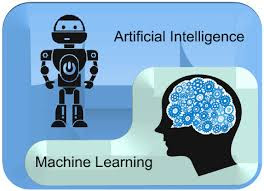
  Artifical Intelligence and Machine Learning  The roots of Artificial Intelligence and Machine Learning are deep, tracing back to the mid-20th century. Alan Turing, a notable figure in the development of theoretical computer science and artificial intelligence, posed the question "Can machines think?" back in 1950. This ignited the spark that fuelled decades of innovation. The term "Artificial Intelligence" was coined by John McCarthy for the 1956 Dartmouth Conference, the first academic conference of its kind. Machine Learning, on the other hand, made its debut in the late '50s when Arthur Samuel developed a program that could learn to play checkers. Fast forward to the 21st century, we've witnessed the evolution from rule-based systems to machines that can learn from vast datasets and even from their own experiences. The milestones are numerous, from IBM's Deep Blue defeating world chess champion Garry Kasparov in 1997 to the advent of deep learning w...

5G and Beyond

Image
           5G and Beyond 5G network have evolved to improve mobile broadband services by increasing communication speeds, reducing latency, and improving reliability. SK Telecom, the largest mobile operator in South Korea, launched the World’s First commercial 5G service, in April 2019. Today, there were 127,50 deployments in 128 countries as of Nov 30,2022. India launched its first 5G network in Oct 2022, making one of the most rapid nationwide 5G network deployment in the world. Moreover, India’s 5G network ranks among the top-performing networks globally. 5G is designed to do a variety of things that can transform our lives, faster download speeds, more capacity and connectivity for billions of devices-especially in the area of virtual reality (VR), the IOT, and AI.  It generating 22.3 million jobs in the 5G global value chain alone. In India, 5G telecom networks are expected to represent nearly 2% of GDP by 2030. The 5G sector will generate revenue...

AUTONOMOUS VEHICLES “WHERE TECHNOLOGY DRIVES ”

Image
                                AUTONOMOUS VEHICLES “WHERE TECHNOLOGY DRIVES ” A Journey Through Time: The Evolution of AV The concept of self-driving cars began with Leonardo da Vinci's 16th-century designs and progressed through Francis P. Houdina's 1925 radio-controlled car and Norman Bel Geddes' 1939 futuristic visions. Major advancements came with DARPA's 2004 and 2008 challenges, which demonstrated the viability of autonomous technology. Mobileye then revolutionized the field by integrating advanced sensors and mapping into vehicles, paving the way for the widespread adoption of self-driving cars. Inside Autonomous Cars: The Role of Sensors, Algorithms, and Machine learning Autonomous cars rely on sensors, actuators, complex algorithms, machine learning systems, and powerful processors to execute software. Autonomous cars create and maintain a map of their surroundings based on a variety of sensors sit...

Natural Language Processing

Image
  Natural Language Processing Natural language processing (NLP) is a machine learning technology that gives computers the ability to interpret, manipulate, and comprehend human language. Organizations today have large volumes of voice and text data from various communication channels like emails, text messages, social media newsfeeds, video, audio, and more. They use NLP software to automatically process this data, analyze the intent or sentiment in the message, and respond in real time to human communication. It also enhances customer-facing application by automating response to common queries which reduces costs, saves time and improves customer satisfaction.AI, particularly NLP, helps analyze surveys and reviews. NLP translates textual data into actionable insights. Topic modeling and machine learning identify trends and hidden patterns. Applies to various text sources like emails, reviews, and social media. NLP reduces operational costs and  Benefits various sectors by opt...

Bio-Technology: A Revolution In The Making

Image
  Bio-Technology: A Revolution In  The Making Biotechnology is a branch of science that combines biology and technology with the aim of improving people’s quality of life. As the world faces challenges such as climate change, food insecurity, and health crises, biotechnology offers innovative solutions that are increasingly becoming indispensable. Its history can be traced back to thousands of years to agriculture, domestication of plants and animals, fermentation of alcoholic beverages. Biotechnology is a rapidly evolving field with applications in medicine, agriculture, food industry, genetic engineering, industrial biotechnology and environmental sustainability. In medicine it is used in the diagnosis of disease, due to its ability to perform very complicated tests in a shorter time and at lower cost. In agriculture and environment sustainability, biotechnology is used to develop crops that need fewer resources\and produce less waste, helping to protect the environment and ...

Smart Cities

Image
  Smart Cities Smart cities are urban areas that use digital technology and data to improve the quality of life for their residents, enhance the efficiency of services and promote environmental sustainability .The beginning of present day "SMART CITIES" can be traced back to 1974 when the first urban big data project known as 'A cluster Analysis of Los Angeles' was initiated by Los Angeles. This was the first step in visualising the concept of "SMART CITIES". It was evolved to pioneering initiatives in Kyoto, Japan(1995) and other global cities such as Singapore, Barcelona,etc. As it gained momentum in the 2000's and 2010's cities like New York, London and Dubai to embrace sustainability, citizen engagement, urban planning,etc. In India too, PM Modi launched the Smart Cities Mission in 2015, with the goal of developing 100 smart cities across India. A smart city requires strong internet connectivity, smart infrastructure with sensors and real time da...